
Our ancestors kept bad death away. Why do we keep watching it on repeat?
In the Grassfields, rites surrounding violent deaths sought to bring peace to the deceased, protect the living, and restore balance. Today, social media allows images of murder, suicide, and fatal accidents to circulate endlessly and even cross generations. This raises a responsibility: let death end while preserving the memory of the person who lived.
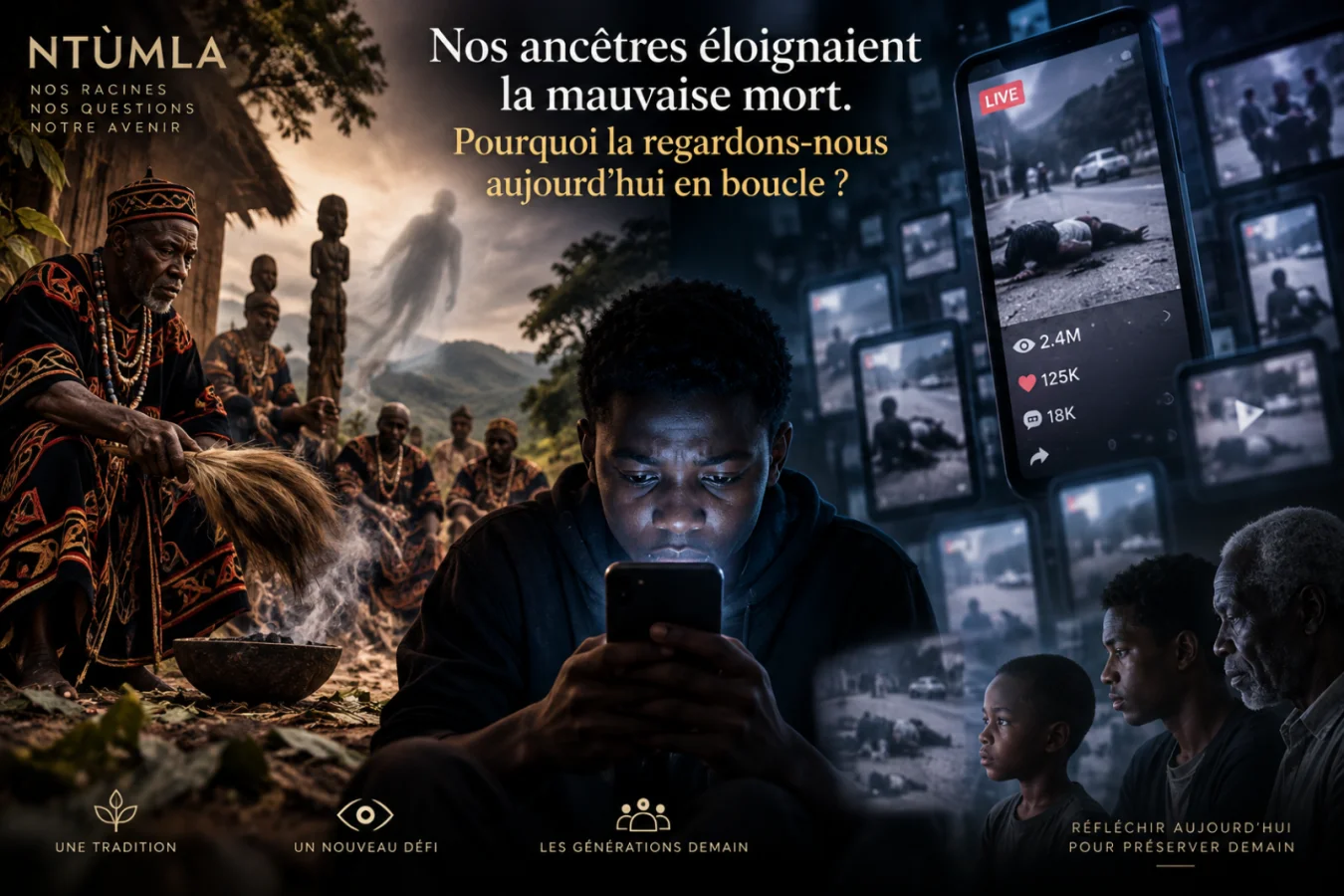

In the Grassfields, not all deaths were regarded in the same way. Dying after a long life, surrounded by family, did not carry the same meaning as dying suddenly through suicide, murder, an accident, or other unusual circumstances. Such deaths violently disrupted the natural order of life and required particular rites.
These rites were meant to protect the living, but they were also performed for the deceased. A person who departed through violence was not meant to remain bound to the turmoil of their death. The deceased had to be appeased and allowed to continue their journey, while balance was restored within the family. A spirit that could not find peace could continue to trouble the living.
Today, we have created a situation our ancestors never knew. We can record a tragic death, preserve it, watch it thousands of times, and send it to people who were nowhere near the place where it happened.