Theme
Solidarity and Mutual Aid
Mutual aid between neighbours, the protection of the most vulnerable, and the refusal of exclusion.
5 articles
In the Grassfields, no one is meant to walk alone. This theme, “Solidarity and Mutual Aid,” gathers texts about neighbours helping one another, the protection of the most vulnerable and the refusal of exclusion, all at the heart of family and community life.
You will discover gestures and voices that watch over everyone: the call of women who, in the fields, signalled their presence and made it possible to notice when one of them was missing, or the dance in which mothers promise a newborn that there will always be arms to support them. The articles also explore the solidarity that accompanies a life from birth to death, the joining of two families in marriage, and Bamiléké vernacular architecture as a vision for the future of social cohesion. Finally, they ask what our ancestors refused to inflict on childless women, on the children of other mothers and on widows, and how to pass these values on to children raised in the diaspora.
To begin, we invite you to read “Houhou: the call that protected Grassfields women,” “Gwà: The Mothers’ Promise to a Newborn” and “Grassfield Solidarity: No One Walks Alone.”

Houhou: the call that protected Grassfields women
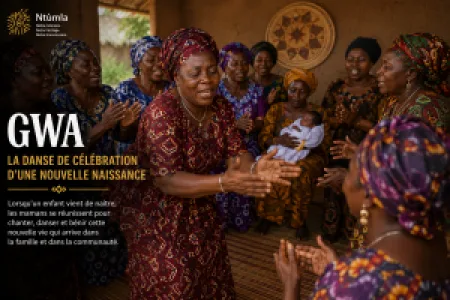
Gwà: The Mothers’ Promise to a Newborn
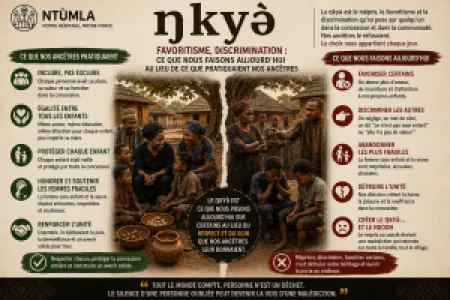
"ŊKYƏ̀": What Our Ancestors Refused, What We Do Today
Grassfield Solidarity: No One Walks Alone