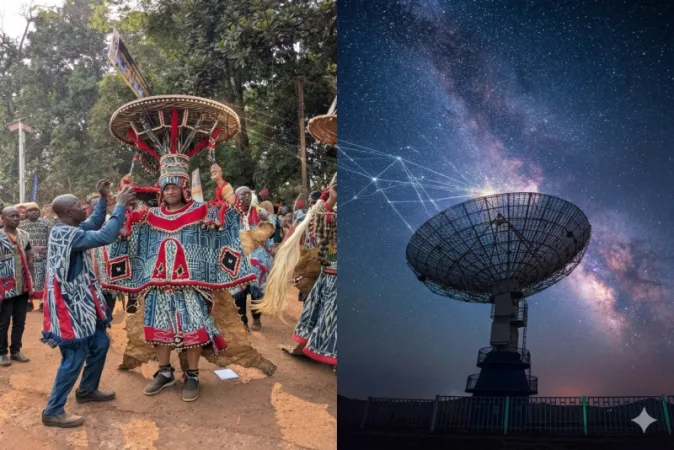
Theme
The Fo and Royal Court
The role of the king, the queen mother, the princes, and the enthronement.
7 articles
At the heart of the Grassfields, the Fo is not merely a ruler: he is the guardian of the kingdom, surrounded by a court where every dignitary, every society and every rite has its place. This page, part of “Royauté et institutions”, looks at the role of the king, the queen mother, the princes and the enthronement.
The articles gathered here explore the many facets of this power. You will discover institutions such as the Kuosi, an ancient warriors' society that became an assembly of dignitaries, or the LALI dance, the living memory of an army and of a complete system of governance, with the Koungang as sovereign justice. Other texts discuss the red feathers that accompany enthronement rites, the place of the number 9 in Bamiléké cosmogony, and the Tso headdress, presented as a sacred antenna. The Fovu sanctuary in Baham appears as the place where the royal lineage speaks to the ancestors.
The history of the kings themselves is not forgotten: those who resisted, and the journey of Kamdem Ninyim Pierre, son of the King of Baham, caught between resistance and survival. To begin, we invite you to read “The Kuosi: the elephant society, guardian of power in the Grassfields”, “ANCESTRAL MEMORY | Episode IV: Our Kings Who Resisted” and “The Number 9 in Grassfield Cosmogony Fulfillment, Rebirth, Harmony and Accomplishment by Malla Kenmeugne”.
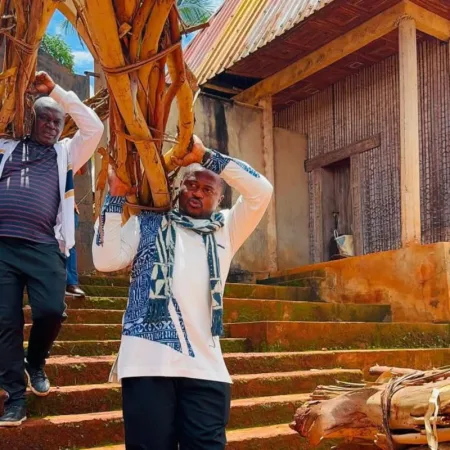
Yökkwefô: the presentation of wood, an ancestral bond of allegiance and protection between the king and his people
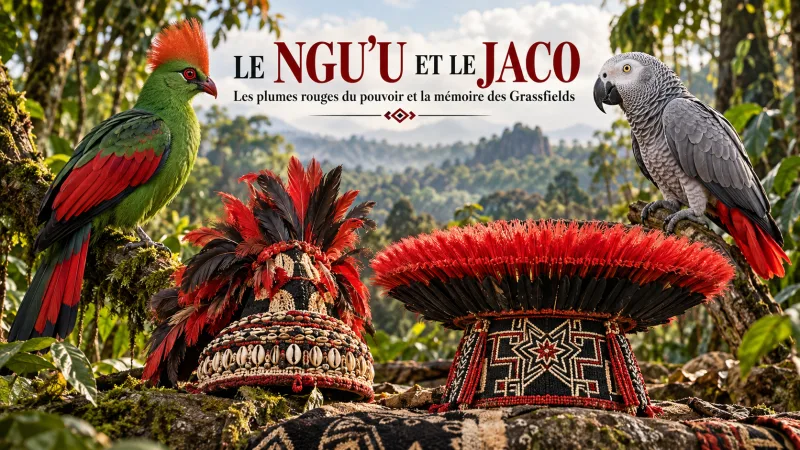
The Ngu’u and the jaco: two birds, the red feathers of power, and the memory of the Grassfields

FOVU The birth of a sanctuary, and why our intentions find their way there
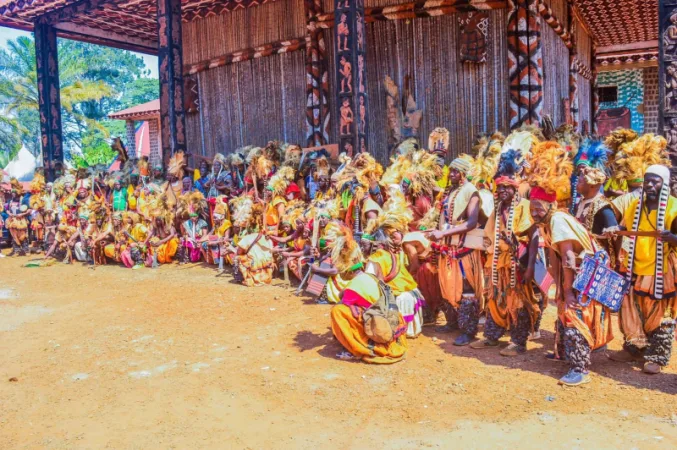
LALI: The Bamiléké War Dance, or the Memory of a People Who Had Already Given Themselves Everything
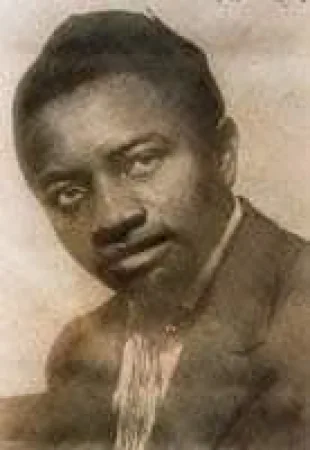
Kamdem Ninyim Pierre: The Youngest Minister in Cameroonian History, Son of a People Who Never Bent
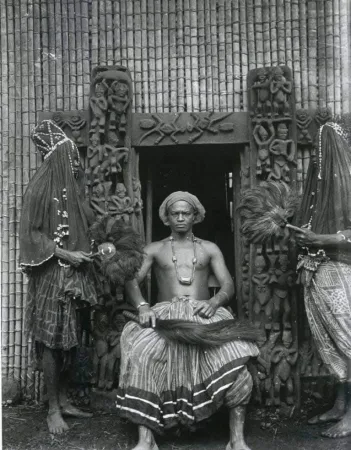
The Number 9 in Grassfield Cosmogony Fulfillment, Rebirth, Harmony and Accomplishment by Malla Kenmeugne